
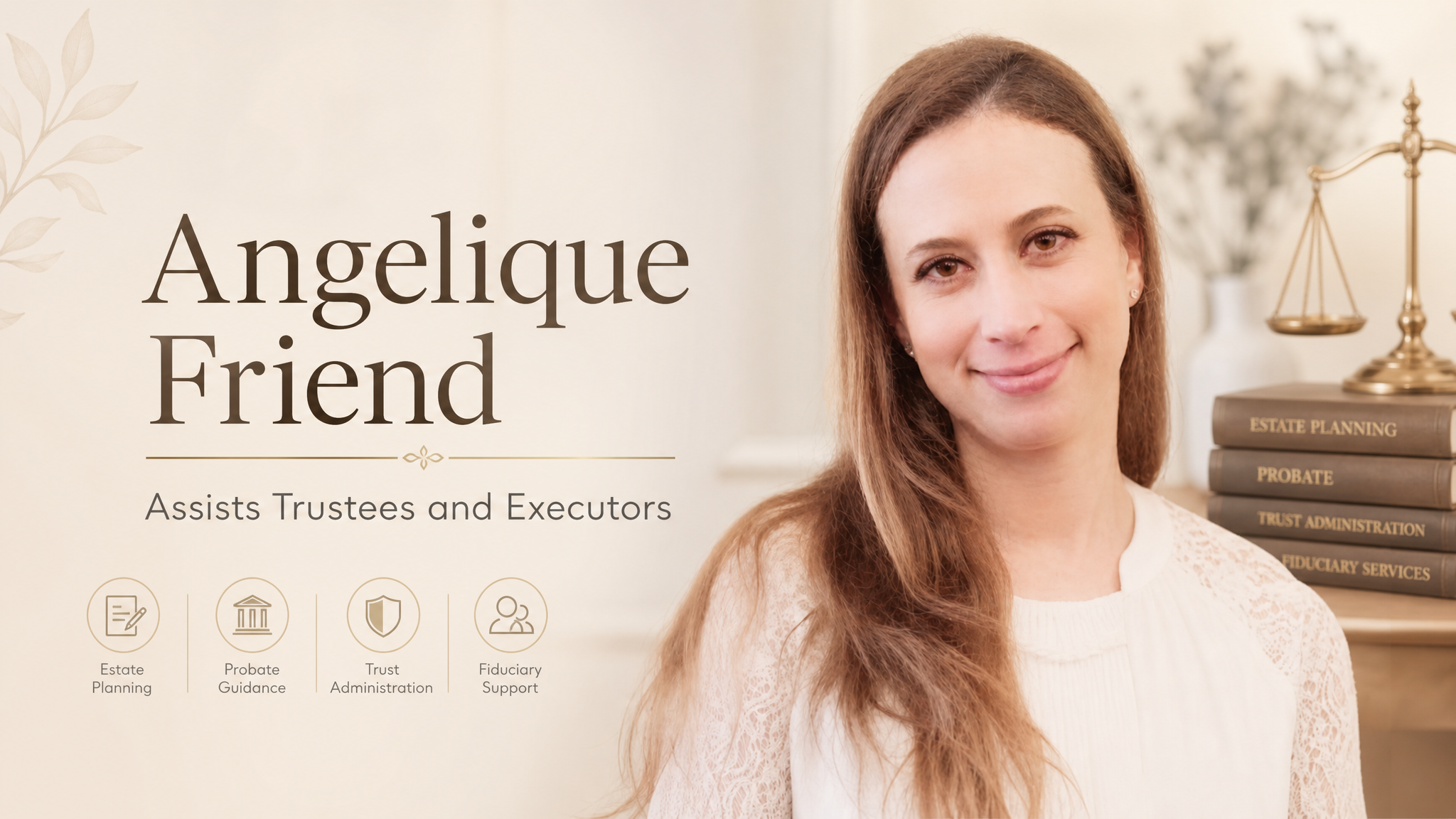
When a loved one passes away or a trust administration begins, trustees and executors often find themselves carrying a responsibility they never expected to manage alone. They may be dealing with grief, family questions, legal deadlines, court requirements, asset protection, and the pressure to “get everything right” at the same time. That is exactly where Angelique Friend Probate support becomes especially valuable.
Angelique Friend is described as a California Professional Fiduciary and President of Probate Services, Inc., with decades of experience assisting families, trustees, beneficiaries, attorneys, and courts in matters involving probate administration, trust management, estate settlement, conservatorships, and related fiduciary responsibilities. Her services are positioned around helping families move through complex estate matters with structure, objectivity, and professional oversight.
For trustees and executors, the challenge is rarely just one task. It is the accumulation of many responsibilities happening at once. Notices must be handled properly. Records must be accurate. Assets must be located, protected, and valued. Beneficiaries expect timely updates. Attorneys, accountants, appraisers, and real estate professionals may all need to work together. A mistake or delay can create unnecessary conflict, financial loss, or court complications. Professional fiduciary guidance can reduce that burden by bringing experience, process, and calm decision-making into what is often an overwhelming situation.
Why Trustees and Executors Often Need Professional Help
Many people are named as trustees or executors because they are trusted by a parent, spouse, sibling, or close friend. But being trusted does not automatically mean someone is prepared for the legal, financial, and practical responsibilities of estate administration. In fact, many trustees and executors are serving for the first and only time in their lives.
An executor is generally responsible for administering a probate estate according to court procedures and the decedent’s wishes. A trustee, on the other hand, manages assets held in trust and carries a duty to act in the best interests of the beneficiaries and in accordance with the trust terms. While the roles differ, both carry serious fiduciary obligations. Both require organization, communication, documentation, and sound judgment.
That is why assistance from a seasoned professional can make such a meaningful difference. Rather than leaving a family member to navigate deadlines, paperwork, and emotionally charged decisions alone, a professional fiduciary can help establish order from the start. This kind of support is not about taking control away from trustees and executors. Instead, it is about helping them fulfill their duties more effectively, with less confusion and lower risk.
A Clearer Path Through Probate and Trust Administration
One of the most important ways Angelique Friend assists trustees and executors is by helping create a clear roadmap for the administration process. Probate and trust matters often feel chaotic in the beginning because so much information is missing or scattered. Family members may not know where key documents are located. Financial accounts may be spread across several institutions. Real property may need immediate attention. Meanwhile, beneficiaries want answers before the fiduciary has had a fair opportunity to gather facts.
Professional fiduciary support helps transform that uncertainty into a sequence of manageable steps. Instead of reacting to problems one by one, trustees and executors can work from a structured process. This includes identifying the estate or trust assets, determining what obligations must be addressed first, coordinating with legal counsel, maintaining proper records, and planning for distributions only when appropriate.
Angelique Friend’s published service information emphasizes experience in probate administration, trust administration, fiduciary accounting, court-required reporting, beneficiary communication, and estate coordination. That combination is especially relevant because trustees and executors rarely struggle with only one category of responsibility. They need someone who understands how the administrative, financial, and interpersonal parts of estate settlement connect.
Coordinating the Professionals Trustees and Executors Depend On
Estate administration is often a team effort, even when one person is formally named as trustee or executor. Attorneys may be needed for probate procedure or legal interpretation. CPAs may be necessary for tax matters. Financial advisors may assist with account transitions or investment issues. Realtors may be involved when a home must be sold. Appraisers may be needed for personal property, collections, or real estate valuation.
For a trustee or executor with no prior experience, simply knowing who to call and when can be a major source of stress. The process becomes even harder when these professionals are not coordinated well, or when important information is delayed between them.
This is another area where Angelique Friend’s role becomes valuable. Her service page explains that professional fiduciaries help reduce the burden by coordinating with the professionals involved in estate administration. That matters because even highly qualified advisors work best when someone is actively keeping the moving parts aligned. A fiduciary who understands estate workflow can help ensure that important tasks do not fall through the cracks and that professionals are engaged in the right sequence.
For trustees and executors, this coordination can lead to better efficiency, fewer miscommunications, and a smoother administration experience overall.
Helping Organize and Protect Estate Assets
Before an estate or trust can be settled properly, its assets must be identified, documented, and protected. That may sound simple, but it often is not. Some assets are easy to locate, such as a known bank account or primary residence. Others may take time to uncover, such as retirement accounts, business interests, life insurance proceeds, forgotten safe deposit boxes, personal valuables, or debts owed to the estate.
Once located, those assets must be managed responsibly. Property may need insurance review, maintenance, cleaning, or security. Mail may need to be redirected. Utility accounts may need attention. Sensitive financial records may need to be organized. If a property sits vacant, the risk of damage or loss can increase quickly.
Angelique Friend’s service descriptions include estate asset management and property-related oversight as part of professional fiduciary support. The page also highlights the importance of protecting estate assets through coordination of maintenance, insurance, and security. For trustees and executors, this is one of the most practical forms of assistance because asset protection directly affects the value ultimately preserved for heirs and beneficiaries.
Providing Neutral, Objective Decision-Making
Family dynamics can complicate even the most straightforward estate. Old conflicts may surface. Siblings may disagree on the sale of a home. Beneficiaries may become suspicious about timing, expenses, or distributions. A trustee or executor who is also a family member may feel pressure from multiple directions, especially if they are trying to balance fairness with emotional loyalty.
One of the strongest advantages of working with a professional fiduciary is neutrality. Angelique Friend’s service page specifically notes that professional fiduciaries bring objectivity and help keep decisions focused on legal responsibilities rather than personal emotions. This can be critical in preserving both estate integrity and family relationships.
Objectivity matters because trustees and executors are expected to act in the best interests of the estate or trust, not in response to the loudest voice in the family. When a neutral professional is involved, decisions can be guided by documentation, fiduciary duty, and process rather than pressure, blame, or assumptions. That does not eliminate conflict entirely, but it often lowers the emotional temperature and helps everyone focus on the facts.
Improving Communication With Beneficiaries and Heirs
A large portion of estate conflict comes from silence, uncertainty, or inconsistent communication. Beneficiaries often become frustrated when they do not understand what is happening, why delays are occurring, or what the next steps will be. Trustees and executors, meanwhile, may delay updates because they fear confrontation or simply do not know what should be shared.
Professional support can improve this dramatically. Angelique Friend’s published materials reference clear and consistent beneficiary communication as part of the value of experienced fiduciary services. This is more important than many people realize. Good communication does not mean discussing every private detail or responding to every emotional demand immediately. It means setting expectations, providing appropriate updates, documenting key information, and helping beneficiaries understand that administration takes time and must follow proper procedure. Source
For trustees and executors, this communication support can reduce misunderstandings, help manage expectations, and lessen the chance that frustration grows into formal disputes.
Handling Record-Keeping, Accounting, and Reporting
Executors and trustees are accountable for what they do. That accountability depends on records. Receipts, statements, expenses, distributions, valuations, property costs, professional fees, and other transactions may all need to be documented carefully. In some cases, formal court accountings or reports are required. Even when not legally mandated, strong documentation is a best practice because it helps demonstrate that the fiduciary acted properly.
According to the official service information, Probate Services, Inc. provides fiduciary accounting and court-required reporting, along with services such as court accountings. The homepage also lists court accountings among the company’s services. These details matter because many trustees and executors underestimate how technical estate accounting can become, especially when administration lasts many months or involves multiple assets and beneficiaries.
Professional assistance in this area helps trustees and executors maintain transparency and stay prepared if questions arise later. Good accounting is not just about numbers. It is about building trust, reducing exposure, and supporting orderly administration from start to finish.
Supporting Trustees in Specialized Trust Situations
Not all trusts are simple family living trusts. Some involve special needs planning, charitable objectives, ongoing asset management, or complex beneficiary structures. These situations require more than basic administration. They require careful judgment and a strong understanding of ongoing fiduciary responsibilities.
The Probate Services, Inc. homepage states that the company serves as trustee for living trusts, special needs trusts, and charitable remainder trusts, and also provides trust protector services. That range suggests experience beyond routine trust administration. For trustees who have been named in specialized trust arrangements, this kind of background can be particularly helpful. Source
A trustee in a special needs context, for example, may need to ensure that distributions do not interfere with benefit eligibility. A charitable remainder trust may involve longer-term oversight and compliance considerations. A trust protector role may require review of provisions, powers, and continuity planning. In these matters, general good intentions are not enough. Trustees benefit from experienced support that helps them understand the practical consequences of their decisions.
Helping Executors Manage Probate More Efficiently
Probate often carries a reputation for being slow, expensive, and stressful. While some estates do become highly complex, many delays come from disorganization, missed steps, incomplete information, or preventable procedural problems. Executors who are unfamiliar with probate may unintentionally create bottlenecks simply because they do not know what comes next.
Professional fiduciary support helps reduce those inefficiencies. Angelique Friend’s service page describes assistance with administrative tasks such as court filings, asset inventories, deadlines, and coordination. That kind of operational support can help keep probate moving in a more orderly way.
For executors, efficiency matters not only because it saves time, but because it helps preserve estate value. Delays can mean additional maintenance costs, ongoing insurance premiums, extended professional fees, or growing tension among heirs. A more organized process benefits everyone involved.
Emotional Support Through a Difficult Responsibility
Although fiduciary work is technical, it is also deeply human. Trustees and executors are often serving during one of the hardest periods of their lives. They may be grieving while fielding questions from relatives. They may be clearing out a family home. They may be making decisions that carry emotional significance, such as whether to sell property or distribute sentimental belongings.
The official description of Angelique Friend’s role emphasizes serving families with care and respect and providing empathy alongside structure. That balance is important. Trustees and executors do not just need instructions. They need steady guidance from someone who understands that estate administration happens in real families, under real pressure. A skilled fiduciary professional helps people move forward without feeling alone in the process. That emotional steadiness can be just as valuable as technical knowledge.
What Makes This Support Especially Valuable
The value of professional fiduciary assistance lies in the combination of practical administration, objective judgment, and consistent oversight. Angelique Friend is presented publicly as a California Professional Fiduciary with decades of experience and as the President of Probate Services, Inc. The company’s published service list includes trustee services, estate administration, guardianships, conservatorships, court accountings, representative payee services, and care management. Together, those offerings suggest a broad fiduciary practice designed to support individuals, families, attorneys, trustees, and courts in estate-related matters. For trustees and executors, that breadth matters because estate problems are rarely isolated. A property issue can become a beneficiary issue. A communication delay can become a legal issue. An accounting omission can become a dispute. Working with a fiduciary professional who understands the whole picture can reduce risk while giving the acting trustee or executor more confidence in each step.
Final Thoughts
Serving as a trustee or executor is an honor, but it is also a serious legal and practical responsibility. Many people step into the role with the best intentions yet quickly realize how much time, organization, and emotional endurance the work requires. From asset protection and court reporting to beneficiary communication and professional coordination, the job can become overwhelming without the right support.
That is where Angelique Friend’s assistance can make a meaningful difference. By offering structure, neutrality, fiduciary experience, and hands-on coordination, she helps trustees and executors carry out their responsibilities more effectively and with greater peace of mind. For families trying to navigate probate or trust administration in California, professional guidance can turn a confusing process into one that feels more manageable, accountable, and respectful to everyone involved.

Connect With Us